
From Field to Yarn: How IND HEMP Is Making American Hemp Fiber ‘Ready to Spin’
Hemp has been talked about as a “future fiber” for years — strong, sustainable, fast-growing, and well-suited to everything from garments to industrial textiles. But there’s a reason hemp fiber, and more specifically, American-Grown hemp fiber hasn’t shown up on store shelves at the scale cotton or polyester has: turning raw hemp stalks into yarn that can actually be spun, woven, or knit has historically been difficult to do consistently, and even harder to do at scale in the United States.
At IND HEMP, closing that gap has been the focus of years of investment — and a new processing line at our Fort Benton, Montana facility marks a major step forward.
Why Spinning Is the Real Starting Line
It’s easy to think of “processing hemp fiber” as a single step, but it’s really several steps and a series of multiple machines along a processing line. Hemp stalks first go through bale opening, decortication and cleaning, which separates the bast fiber from the woody core (hurd) of the plant. That decorticated technical fiber is has various grades based on the variety, amount of retting and other quality factors and is extremely useful on its own for a wide range of product applications, but it isn’t yet refined enough to be spun into yarn.
Spinning is where fiber actually becomes usable for textiles. Once hemp is spun into yarn, that yarn can be woven or knit into an enormous range of end products: apparel, home goods like towels, bedding, furniture and drapes and technical fabrics used in things like automotive interiors and composites. Without that spinning step, the hemp fiber cannot be used to make any of these things.
What’s New in Fort Benton
IND HEMP’s new secondary processing line, which includes equipment from Trützschler, a global leader in fiber processing machinery, performs the refining steps — opening, cleaning, and cottonizing — that bring hemp fiber to spinning-ready quality directly at our Fort Benton facility. That means the upgrading work that used to happen elsewhere, after our fiber left the building, now happens in-house, at the source, improving both processing and logistical efficiencies across the supply chain.
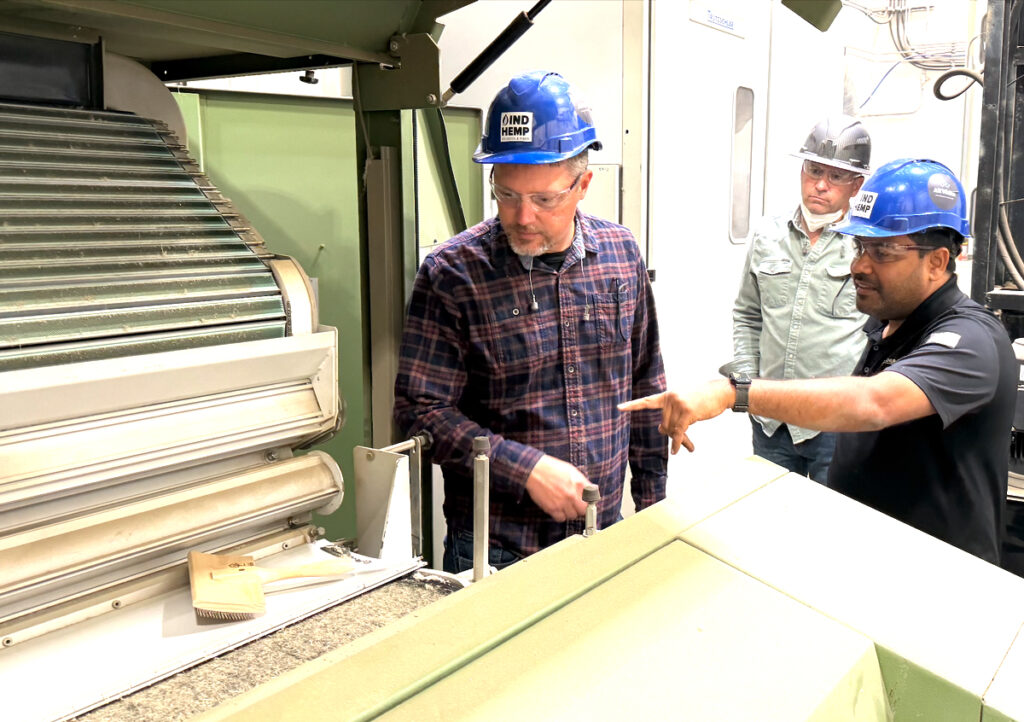
The result is multiple grades of premium, cottonized fiber available directly from IND HEMP — fiber that’s ready for spinners and nonwoven manufacturers to use as supplied. In addition to our Platinum, Silver, Bronze, and Iron decorticated technical fibers, IND HEMP now offers Premium hemp fibers as Refined, Cottonized and Bleached.
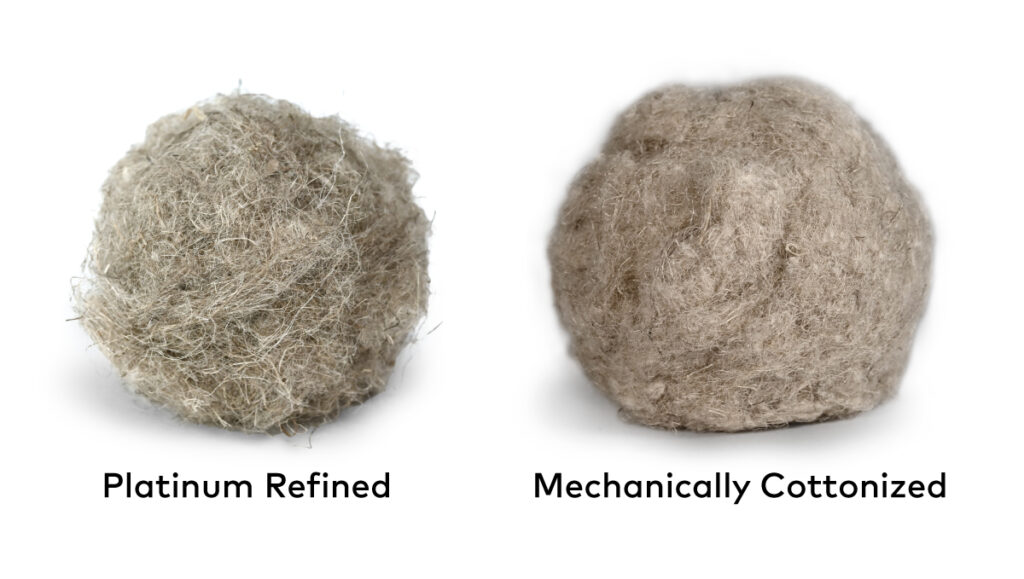
A Quick Explainer: What does “Cottonized” Mean?
You’ll hear this term a lot in hemp textile circles, so it’s worth explaining. While traditional hemp fiber textile production in China uses long fiber and wet process spinning- similar to flax fiber processing for linen fabrics- we do not have this type of infrastructure or supply chain. In the USA, most textile and nonwoven equipment in operation today was built and optimized around either synthetic fibers like polyester — which are uniform and require little adaptation — or cotton, which has its own well-established processing infrastructure. In order to enter those manufacturing processes and facilities, the pathway is to follow the cotton and for that we need the hemp fiber to look, feel, measure and act similar enough to cotton to work in those systems. Hence, the term ‘cottonized hemp fiber’ describes an end result specification that defines the fiber as close enough to that of cotton staple fiber that it can be run on cotton systems, including carding and sliver production and subsequently the spinning of yarns. This is the key that lets hemp fiber plug into spinning and processing systems that already exist, rather than requiring manufacturers to build entirely new infrastructure just to work with hemp.
Start in Montana- Crawl, Then Walk, Then Run
We did not just jump into textile-grade spinnable hemp fiber now, this is something we and our partners have been working towards since we first broke ground on our fiber processing facility in August 2020.
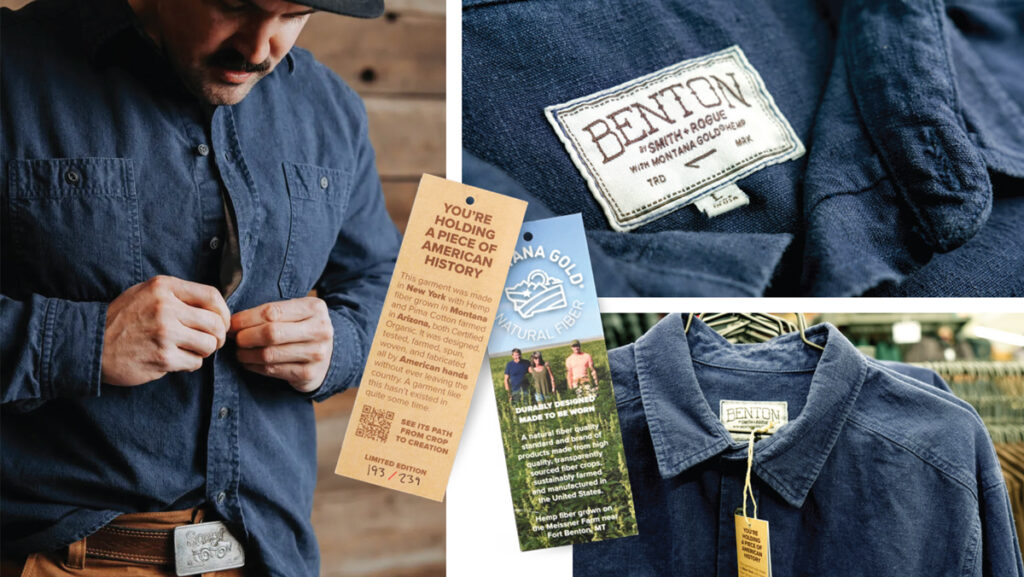
When this news first hit, our neighbors in Great Falls who own the North 40 stores and apparel and gear brand Smith and Rogue and have been using hemp in their S&R workwear came to us and said, ‘we use hemp in our products, now that you’re here and doing hemp, let’s use Montana hemp in our garments’. To which we were excited, but shared that we’re probably at least 5 years away from that. Well, it actually took 5 years to get to commercialized and to market but Montana-grown fiber, upgraded, cottonized and spun into yarn has already proven itself in finished, 100% USA-grown and sewn textile products with the Benton Work Shirt, released by Smith & Rogue in late 2025.
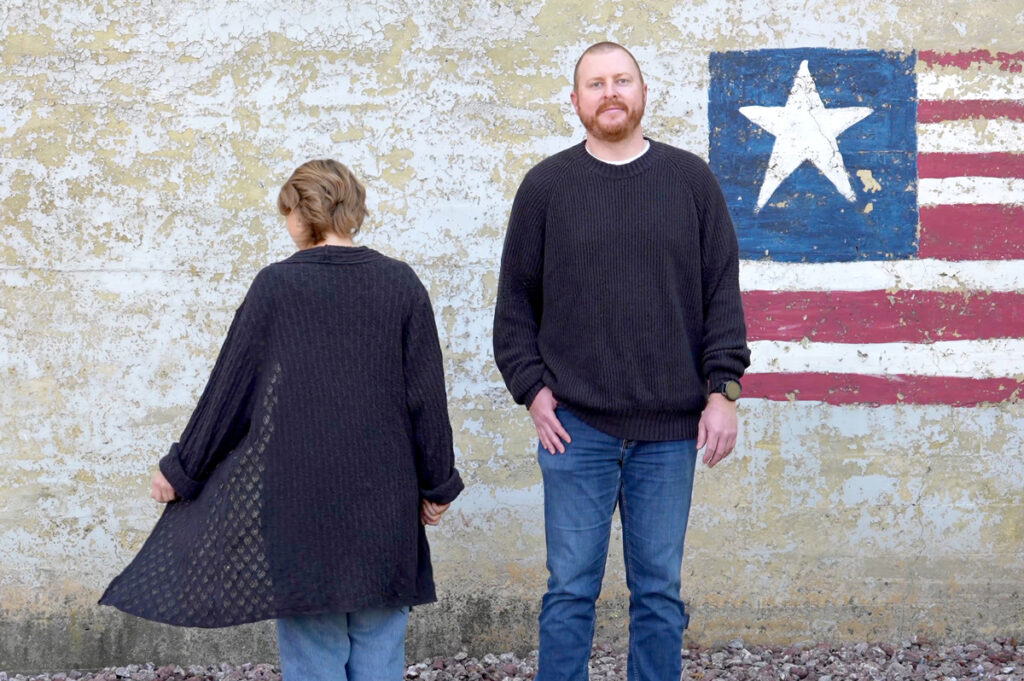
More recently, yarns made with our Montana Gold® branded hemp fiber demonstrated its compatibility with knitting systems in the specialty knit sweaters produced by Maeknit of New York City, unveiled at the Fashion Institute of Technology during New York Fashion Week in September 2026. Both of these early projects were coordinated with Guy Carpenter of Bear Fiber in North Carolina, with refining and cottonizing of the fiber and spinning and weaving completed at multiple mills across the southeastern United States, and with the final garment production in NY.
With our new Fort Benton line now operational, the cottonizing process that were once required to happen downstream, outside our facility can now happen before the fiber ever leaves Montana, creating more opportunities for spinning mills both domestically and around the globe to purchase and integrate this fiber into their manufacturing and products. We had to crawl over a few years to prove our hemp could be grown, processed and upgraded to the right quality for spinning and commercialized products. We have been walking the path of continuous improvement in both agricultural and harvesting practices and our own processing efficiencies to understand how to make spinnable fiber, while also walking and establishing the supply chain and how our fiber needs to perform to gain adoption. As we moved forward into this new line we have tested equipment from multiple countries to validate our decorticated fiber on their machines before making the decisions that led to our new premium fiber processing line. Now we are ready to run, and run lots and lots of hours and produce many tons of premium cottonized fiber.
Beyond Yarn: Premium Fiber for Nonwovens, Too
While spinning gets a lot of attention, it’s not the only place refined and cottonized hemp fiber matters. The same finer, cottonized fiber that makes spinning possible is also what’s required for higher-value nonwoven processes like spunlace or hydroentangled technologies, used to manufacture products such as wet wipes, dry towels, and hygiene products. These manufacturing systems and equipment have also been optimized for synthetics or cotton, so again, cottonizing the hemp fiber makes it functional and appropriate to run on those existing manufacturing lines. That means this strategic processing investment strengthens IND HEMP’s ability to supply both the textile and nonwoven markets from one source, allowing American-Grown hemp fiber to find pathways and inclusion into a much wider range of products by being compatible with more existing manufacturing processes.
Built for a Global Supply Chain
As proud as we are of fully USA-made products like the Benton Shirt, IND HEMP is built and scaled to supply far greater volumes of fiber than current U.S. textile and nonwoven manufacturing capacity can consume on its own. Today’s textile supply chain is global, and reaching that larger opportunity means building partnerships beyond our borders.
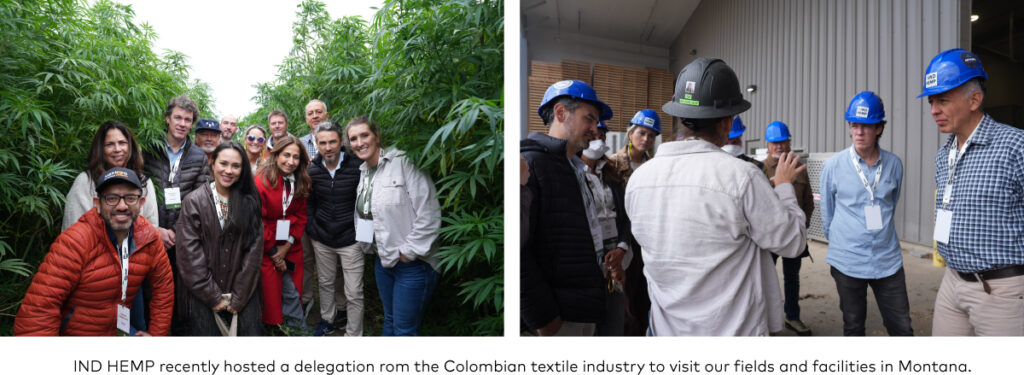
That’s been a major focus and initiative for IND HEMP throughout 2026. We’ve exported fiber to international markets across Asia, Europe, and the Americas, and we’ve been actively building the relationships that support longer-term partnerships: visiting mills and manufacturers abroad, hosting international textile delegations at our Fort Benton facility, and participating in trade missions designed to introduce Montana-grown hemp fiber to new markets. These efforts are ongoing, and we expect our international footprint to keep growing as more partners look for a reliable, scalable, U.S.-based source of premium hemp fiber.
Looking Ahead
With spinning-ready fiber now available directly from our Fort Benton facility, IND HEMP has closed one of the biggest gaps standing between American-grown hemp and the global textile supply chain. Whether you’re a spinner, a nonwoven manufacturer, or a brand looking to bring natural, traceable fiber into your products, we’d welcome the conversation.
Interested in learning more about sourcing premium hemp fiber from IND HEMP? Contact our team [email protected] to talk about supply partnerships.